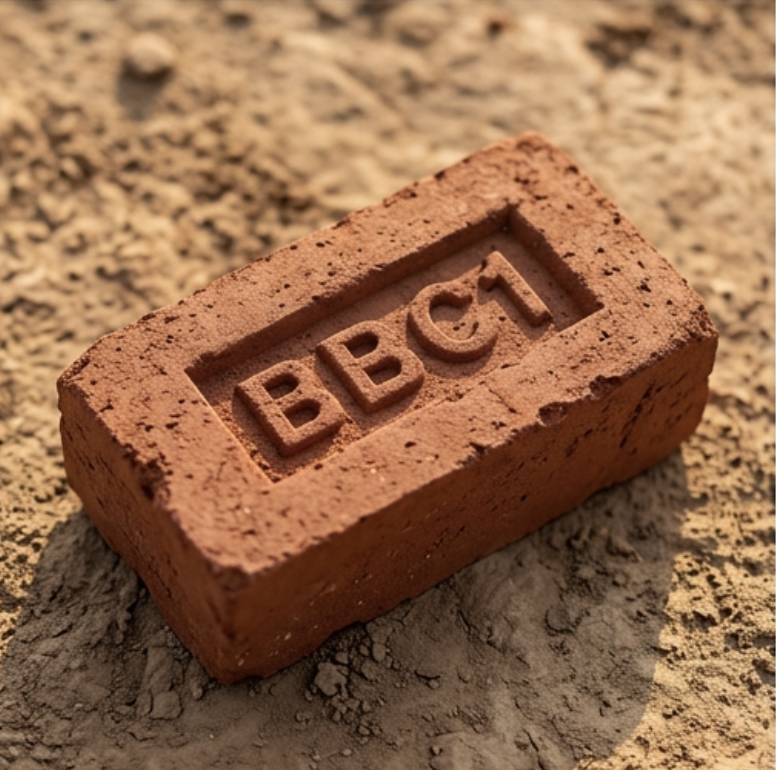
Manufacturing process
How BBC1 Makes Bricks
Our IS 1077-compliant process runs from raw clay excavation through industrial pugmills, wire-cut extruders, and our HSPCB-approved Zigzag kiln — producing consistent, high-strength bricks that government contractors and engineers have trusted since 1988.
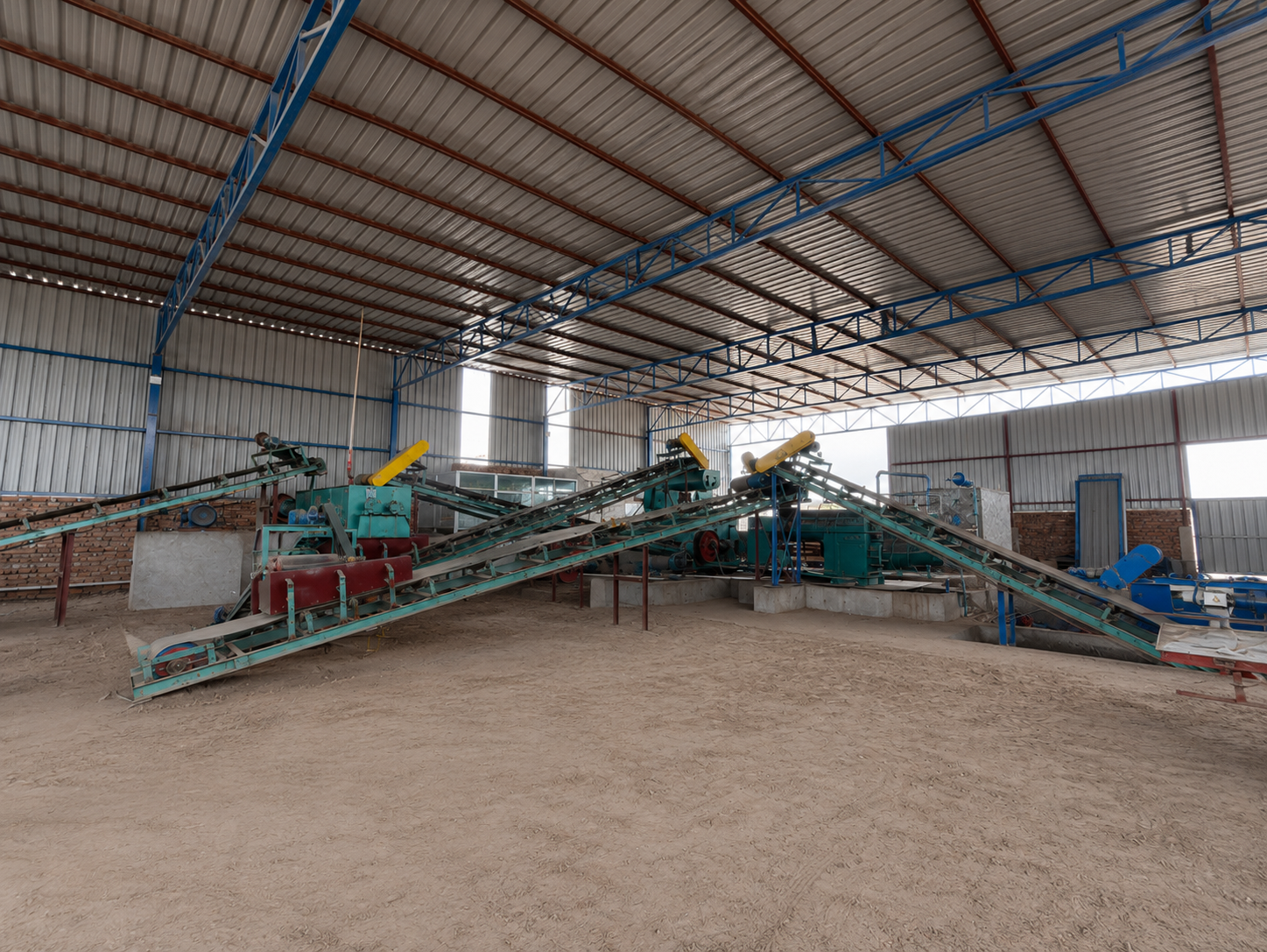
Clay Excavation
BBC1 sources high-quality alluvial clay from licensed pits within a few kilometres of the kiln in Bhuna, Fatehabad district. The clay in this region has the ideal plasticity — it holds shape after extrusion and develops high compressive strength after firing. Excavators dig and transport clay to the mixing yard.
- Alluvial clay — Fatehabad district
- Excavator-loaded, tractor-transported
- Inspected for sand content and plasticity
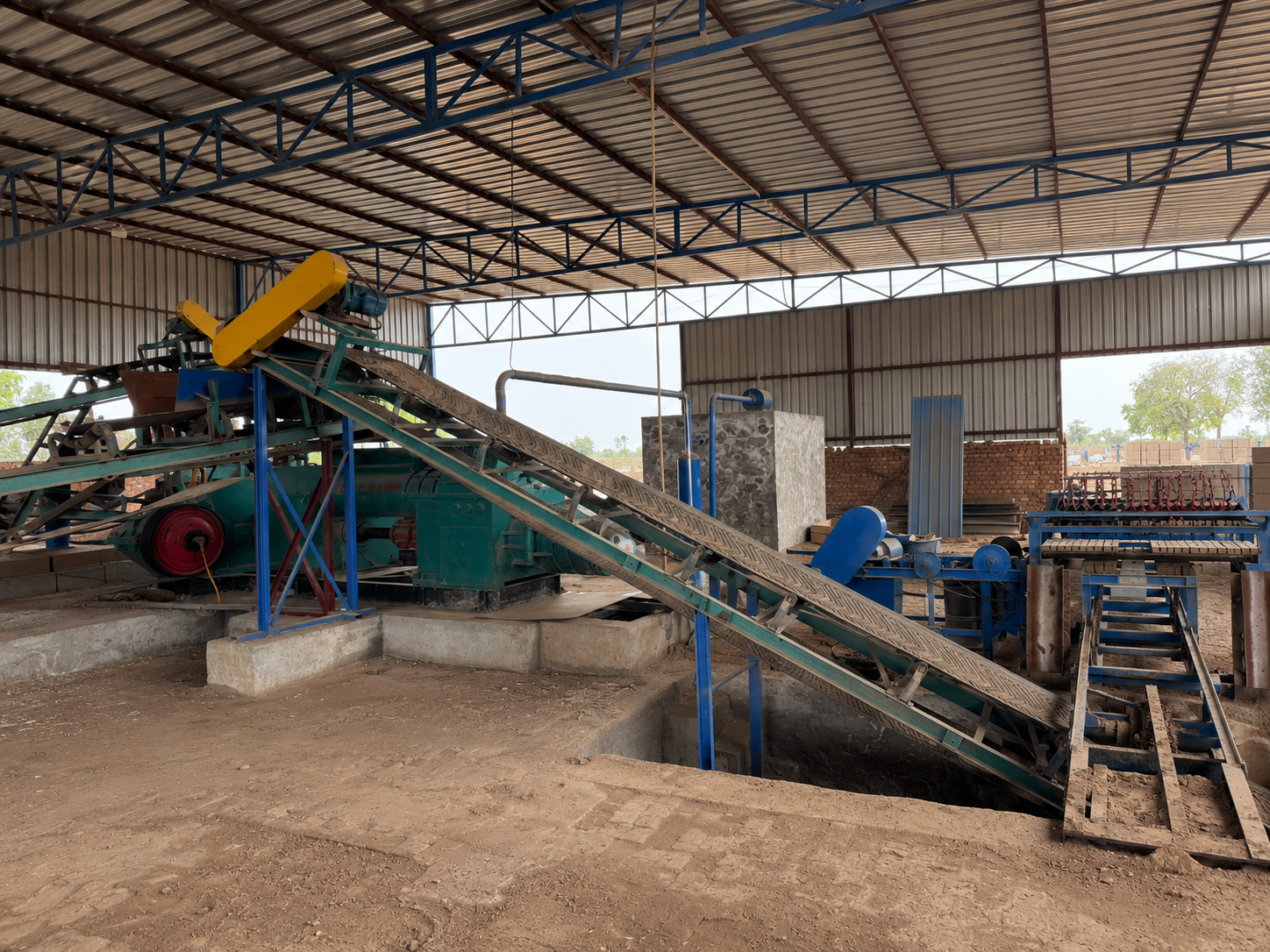
Pugmill (Clay Mixer)
The pugmill is the heart of wire-cut brick manufacturing. Raw clay is loaded into the pugmill hopper along with precisely measured water. The machine's rotating shaft and blades knead the clay continuously — eliminating air pockets, breaking up lumps, and creating a homogeneous, workable pug (soft clay mass). Air-free pug is critical: trapped air causes bricks to crack during drying or explode in the kiln.
- De-airing pugmill with vacuum chamber
- Shaft speed and water addition controlled for optimal plasticity
- Continuous feed — no batch interruptions
- Output: uniform pug ready for extrusion
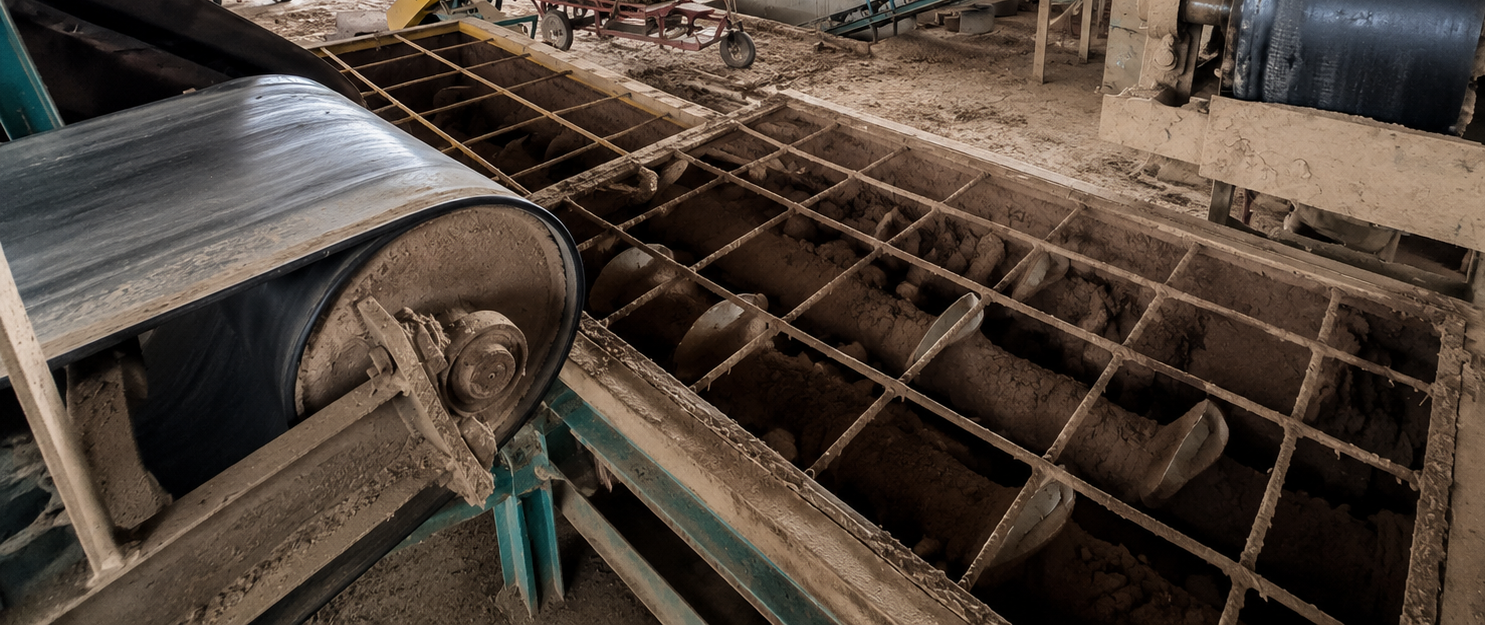
Wire-Cut Extruder
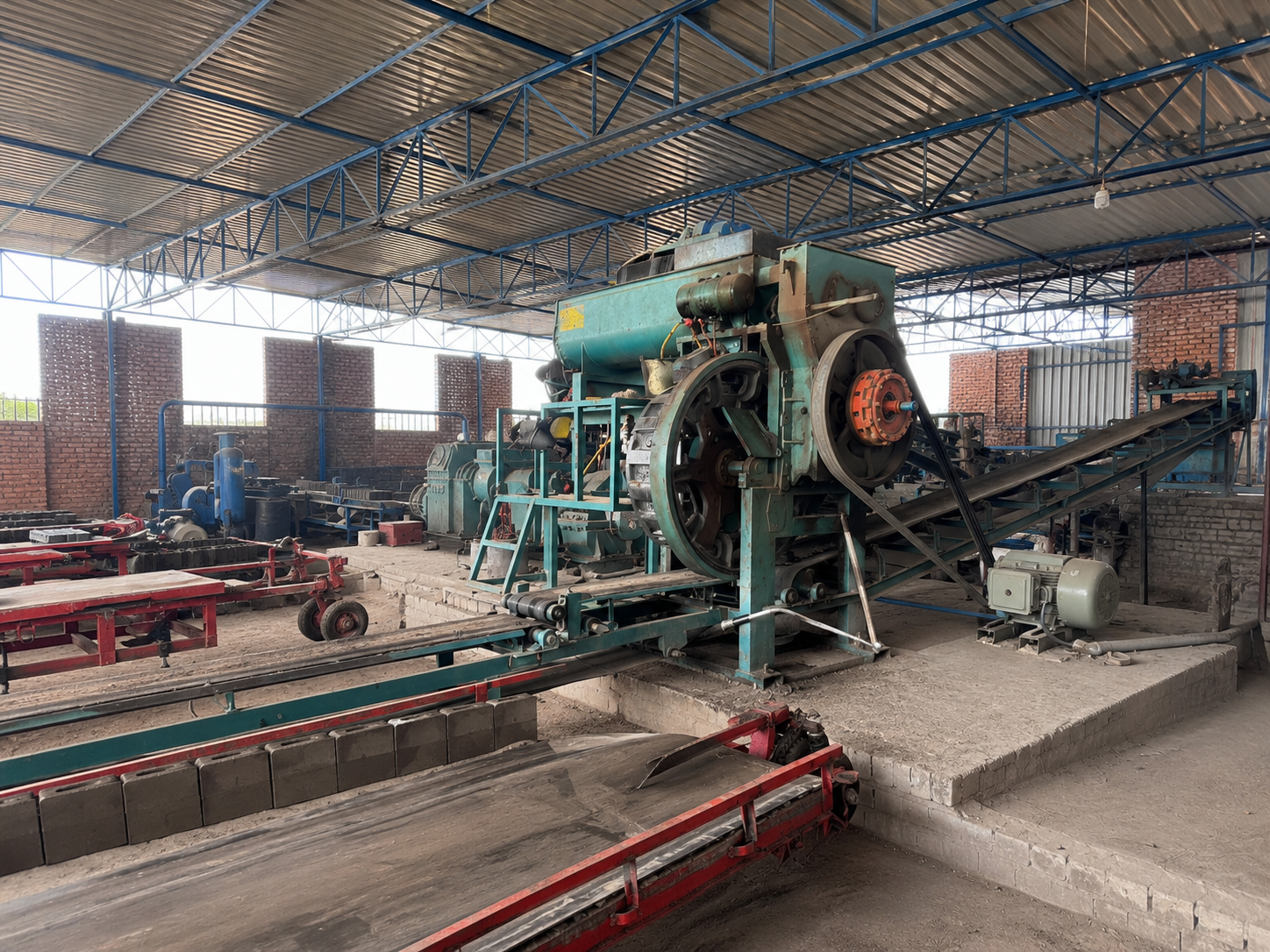
The extruder (also called the column-cutter) takes de-aired pug from the pugmill and forces it under pressure through a rectangular die. This forms a continuous clay column with the exact cross-section of the brick. A frame of taut steel wires then slices across the moving column at measured intervals — cutting individual bricks to precise dimensions in one clean motion. This is why our bricks are called 'wire-cut': no moulding, no hand pressing — each brick is sliced from a continuous, uniform column.
- Die size: 235 × 106 mm cross-section (produces Dabbi and Grill bricks)
- Wires set to 75 mm spacing (Dabbi) or with hole pins (Grill)
- Continuous operation for steady batch-ready dispatch
- Wire-cut surface: slightly textured — better mortar bond vs. pressed bricks
Drying Floor
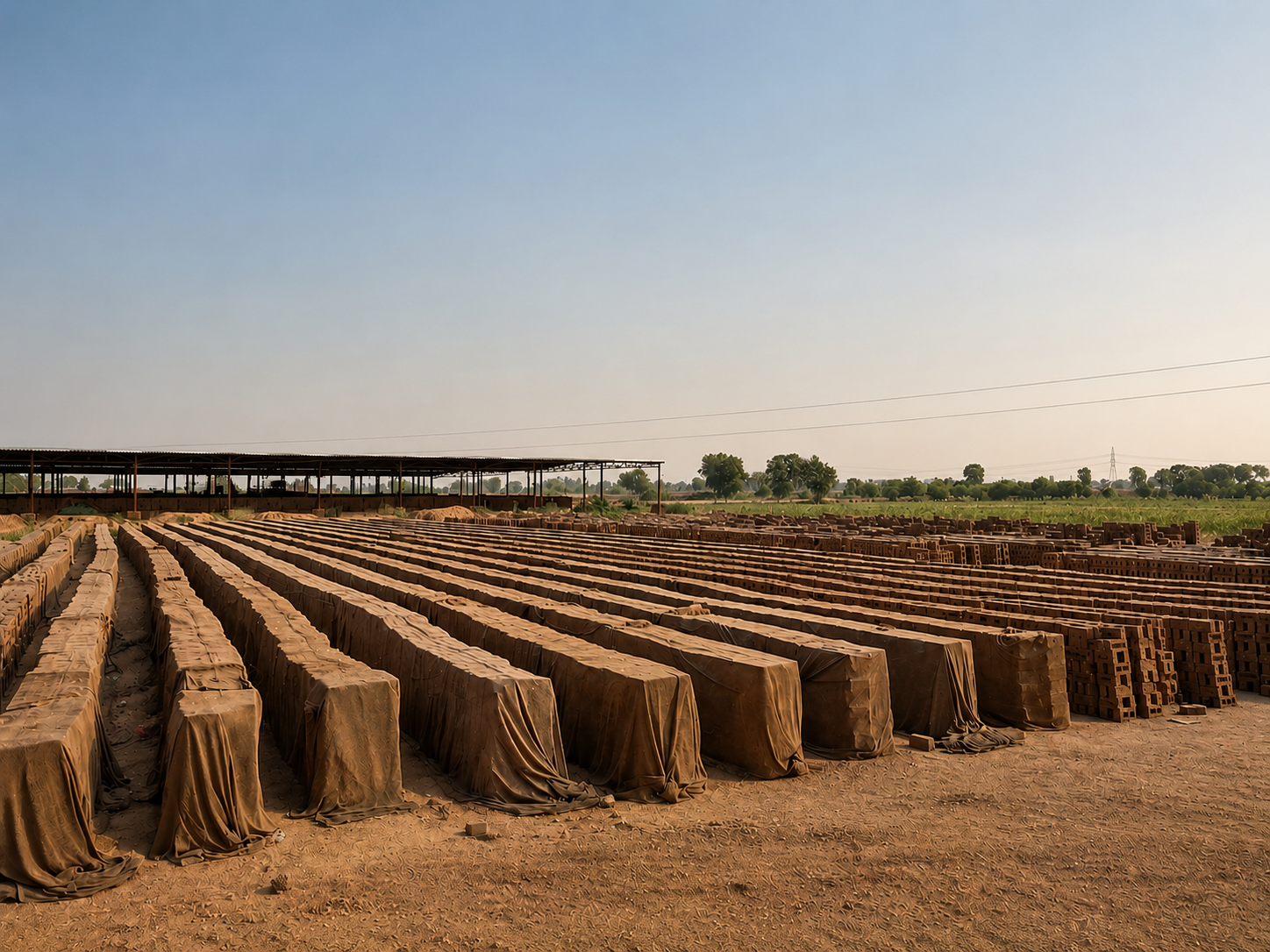
Green bricks (freshly cut, unfired) contain 20–25% moisture. They must be dried gradually before entering the kiln — too much moisture causes steam explosions in the fire zone. BBC1 uses open drying floors where bricks are stacked in rows with gaps for air circulation. In Haryana's climate, air-drying takes 2–3 days in summer and up to a week in winter. Drying quality directly affects final compressive strength.
- Air-drying on open floors: 2–7 days depending on season
- Stacked with gaps — no touching faces
- Moisture reduced to < 5% before kiln loading
Zigzag Kiln Firing
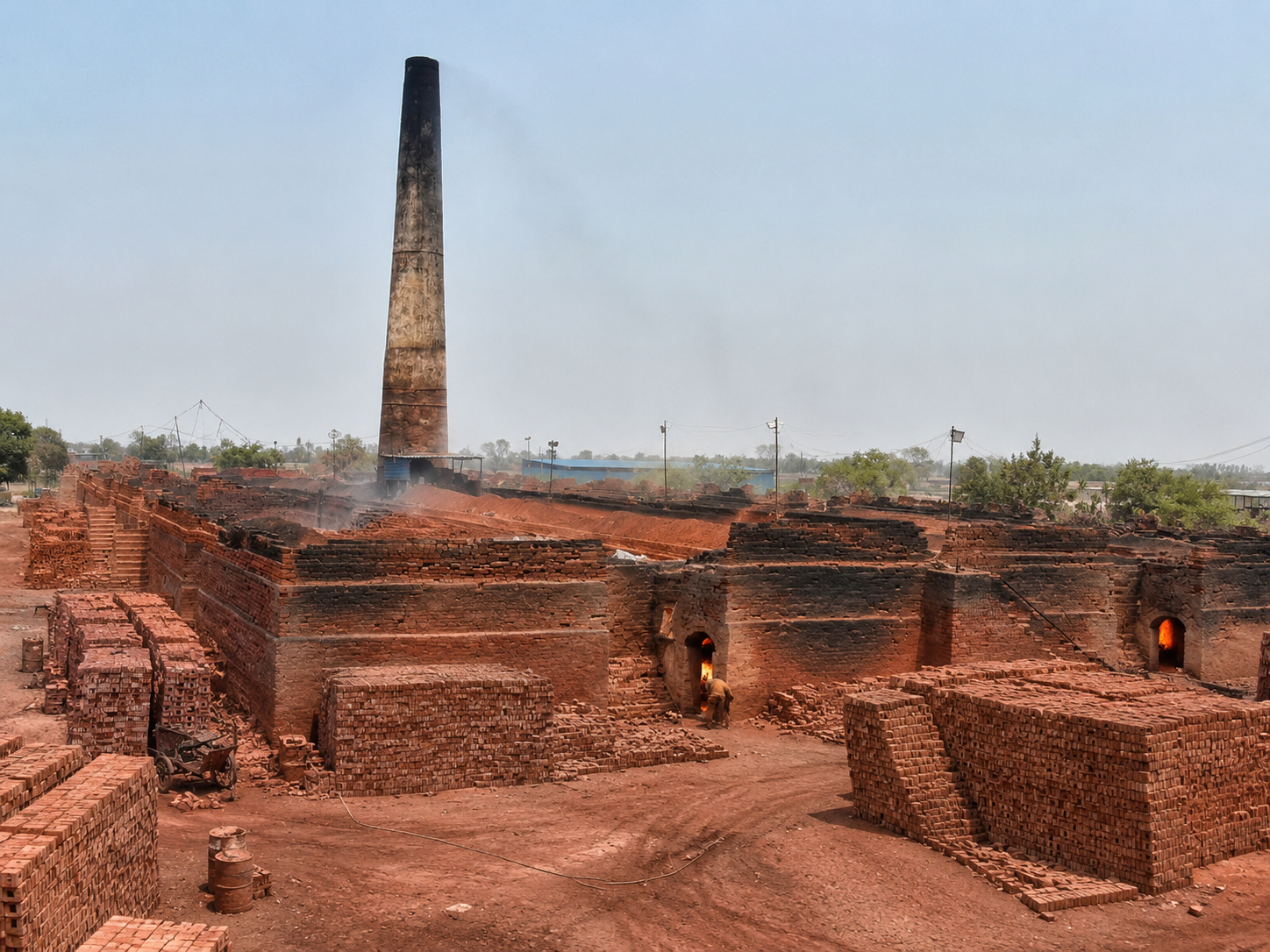
The Zigzag kiln is what separates a good brick from an exceptional one. Unlike traditional fixed-chimney Bull's Trench kilns, the Zigzag kiln forces combustion gases through a zigzag path across the bricks — distributing heat far more uniformly. The result: every brick in the batch reaches the target 900–1000 °C regardless of its position in the kiln. This gives BBC1 bricks their characteristically deep, uniform terracotta colour and high compressive strength. The Zigzag design also burns less coal per thousand bricks, which is why it's the technology mandated by HSPCB (Haryana State Pollution Control Board). Our kiln operates with HSPCB Consent to Operate.
- Kiln type: Zigzag (continuous, moving-fire)
- Firing temperature: 900–1000 °C
- Fuel: coal
- HSPCB Consent to Operate — certified
- Lower coal consumption vs. Bull's Trench kilns
- Uniform heat distribution = consistent compressive strength
Quality Sorting & Dispatch
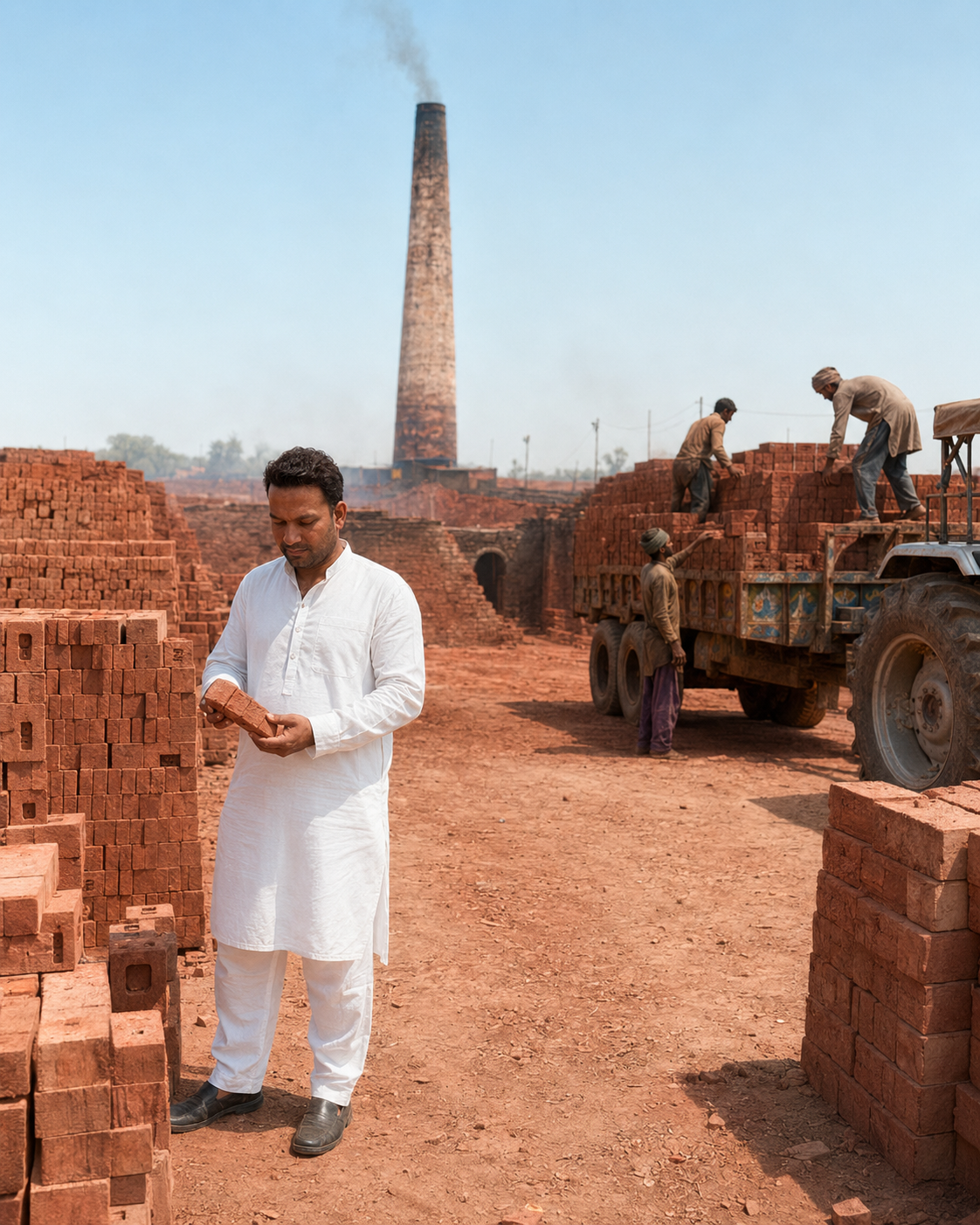
After firing, bricks are unloaded and passed through a manual quality check. Workers inspect each brick for cracks, warpage, underfiring (pale colour, chalky texture), and dimensional deviations. BBC1 ships only A-grade bricks — uniform deep red, no visible cracks, plumb faces. Rejected bricks are crushed for road sub-base or drainage fill and never mixed into an order. Approved bricks are stacked by truck load and dispatched on the same day or next morning for orders within 150 km.
- Hand-checked: colour, crack, face plumbness
- A-grade: deep red, no cracks, within IS 1077 dimension tolerance
- Rejects: crushed — never dispatched
- Dispatch: same day / next morning within 150 km
Process at a glance
See what comes out of the kiln
Three products, one kiln. Dabbi wire-cut brick, 3-hole grill brick, and clay tile — all IS 1077-compliant, all dispatched same day.
Ready to order? Let's talk.
Minimum 10,000 bricks. Delivery across Haryana, Rajasthan and Punjab.